
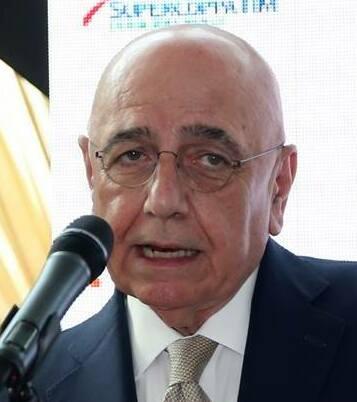
In a development that has reignited discussions surrounding AC Milan’s management strategy, recent incidents involving star player Christopher Nkunku have once again put Adriano Galliani’s potential return to the club into the spotlight. The situation has been further complicated by remarks made by Italian Football Federation President Gabriele Gravina, stirring speculation about the direction the club may take in its leadership. Fans and pundits alike are now grappling with the implications of Galliani’s past successes at Milan and how they could intersect with the club’s current challenges. In this article, we delve into the nuances of these intertwined narratives and explore the implications for AC Milan as they navigate a critical juncture in their season.
Speculations Intensify Around Galliani’s Potential Return Amid Recent Nkunku Developments
Speculations surrounding the potential return of Adriano Galliani to AC Milan have intensified following recent developments surrounding Christopher Nkunku. The French forward, who was seen as a pivotal addition to the Rossoneri’s attacking options, sustained an injury shortly after his arrival. This unforeseen setback has left the club in a precarious position, prompting discussions about reinstating Galliani, a figure renowned for his astute transfer dealings. The urgency of the situation has only been heightened by comments from Gabriele Gravina, Italy’s football federation president, who implied that the club might benefit from Galliani’s experience in navigating difficult times.
The calls for Galliani’s comeback are gaining traction, particularly given his successful history with the club. His previous tenure was marked by decisive actions that shaped the team’s legacy. Among the factors contributing to the speculation are:
- Expertise in player negotiations: Galliani’s track record in striking favorable deals is unparalleled.
- Reputation for building strong squads: His ability to assemble a competitive team has set benchmarks in Serie A.
- Leadership during crises: Galliani has navigated Milan through turbulent periods with resilience.
With Nkunku’s future now shrouded in uncertainty following his injury, the focus on Galliani’s return serves as a reminder of the importance of strong management during challenging seasons. As the Rossoneri eye their options, the pendulum of speculation swings further towards a possible reunion with the iconic executive, bringing with it a collective hope for a swift return to glory for AC Milan.
Gravina’s Comments Spark Debate on Leadership Changes Within Italian Football
In recent days, the Italian football community has been abuzz with the implications of FIGC President Gabriele Gravina’s latest remarks regarding leadership within the sport. Gravina’s comments, interpreted by many as a critique of current management structures, have spurred discussions on potential changes at the top, particularly in light of the recent Nkunku incident that raised eyebrows across Serie A. Observers point out that the timing of Gravina’s statements could not be more critical, as clubs grapple with both on-field failures and off-field governance issues.
The prospect of bringing back experienced figures such as Adriano Galliani is gaining traction among fans and analysts alike. His successful tenure at AC Milan during a transformative period for the club serves as a compelling case for a leadership overhaul. Notably, this debate has produced a range of opinions, including:
- Support for Galliani: Many see his return as a stabilizing force in tumultuous times.
- Skepticism about change: Critics argue that merely swapping leadership does not address underlying issues in Italian football.
- Calls for modernization: There is a growing demand for a shift in strategy that embraces innovation over tradition.
| Potential Changes | Pros | Cons |
|---|---|---|
| Galliani’s Return | Experienced leadership | Could stifle new ideas |
| New Management Strategies | Innovation and growth | Resistance from traditionalists |
| Talent Development Focus | Long-term sustainability | Immediate results may suffer |
Strategies for AC Milan: Evaluating the Implications of Galliani’s Possible Reappointment
The recent buzz surrounding the possible return of Adriano Galliani to AC Milan has gained momentum following the incident with Christopher Nkunku, coupled with comments from FIGC president Gabriele Gravina. These developments have stirred discussions among fans and analysts alike about what Galliani’s reappointment could mean for the club’s future. The veteran executive’s experience and deep-rooted ties to the club can be pivotal in navigating challenges in both the transfer market and on-field performance. With Milan’s ambitions to reclaim their status among Europe’s elite, the prospect of Galliani’s leadership seems tailored to infuse a sense of urgency and strategy that may have been lacking in recent seasons.
Under his previous tenure, Galliani initiated several strategies that transformed Milan into a formidable force in Serie A and the Champions League. As stakeholders evaluate the implications of his potential return, key areas for Galliani to focus on may include:
- Transfer Market Acumen: Leveraging his network to identify undervalued talents.
- Strategic Partnerships: Reinforcing relationships with agent networks for smoother deal-making.
- Youth Development: Prioritizing investment in the youth academy for long-term sustainability.
Having previously executed shrewd negotiations and strategic player acquisitions, the return of Galliani could herald a new era for AC Milan. A critical evaluation of his strategies from the past, alongside contemporary football dynamics, will be essential in crafting a competitive squad that not only competes for titles but also fosters talent from within.
In Summary
As the speculation surrounding the potential return of Adriano Galliani continues to gain momentum, the recent incident involving Christopher Nkunku and comments made by FIGC President Gabriele Gravina have only added fuel to the fire. While Galliani’s connection to AC Milan and his extensive experience in football management render him a compelling candidate, the path to his potential reinstatement remains uncertain amid league dynamics and club ambitions.
As fans and pundits alike await further developments, it is clear that the conversation surrounding Galliani’s nostalgia and expertise will persist in the coming weeks. The football community remains watchful, eager to see how AC Milan navigates these turbulent waters and if the return of a celebrated figure from its storied past could reshape the future of the club. For now, supporters will keep a close eye on the unfolding situation, hoping for answers in the ever-dynamic world of Serie A. Stay tuned to SempreMilan for the latest updates on this developing story.